
If you live in St. Augustine or anywhere in Northeast Florida, you share your environment with a wide variety of insects. Florida's warm, humid climate supports year-round pest activity that homeowners in northern states simply don't experience. Knowing what you're dealing with is the first step toward effective pest control.
This pest identification guide covers the most common bugs found in St. Augustine homes — from the cockroaches that scurry across your kitchen floor to the ants that invade your countertops. For each pest, we'll cover how to identify it, why it's in your home, and when it's time to call a professional.
Cockroaches
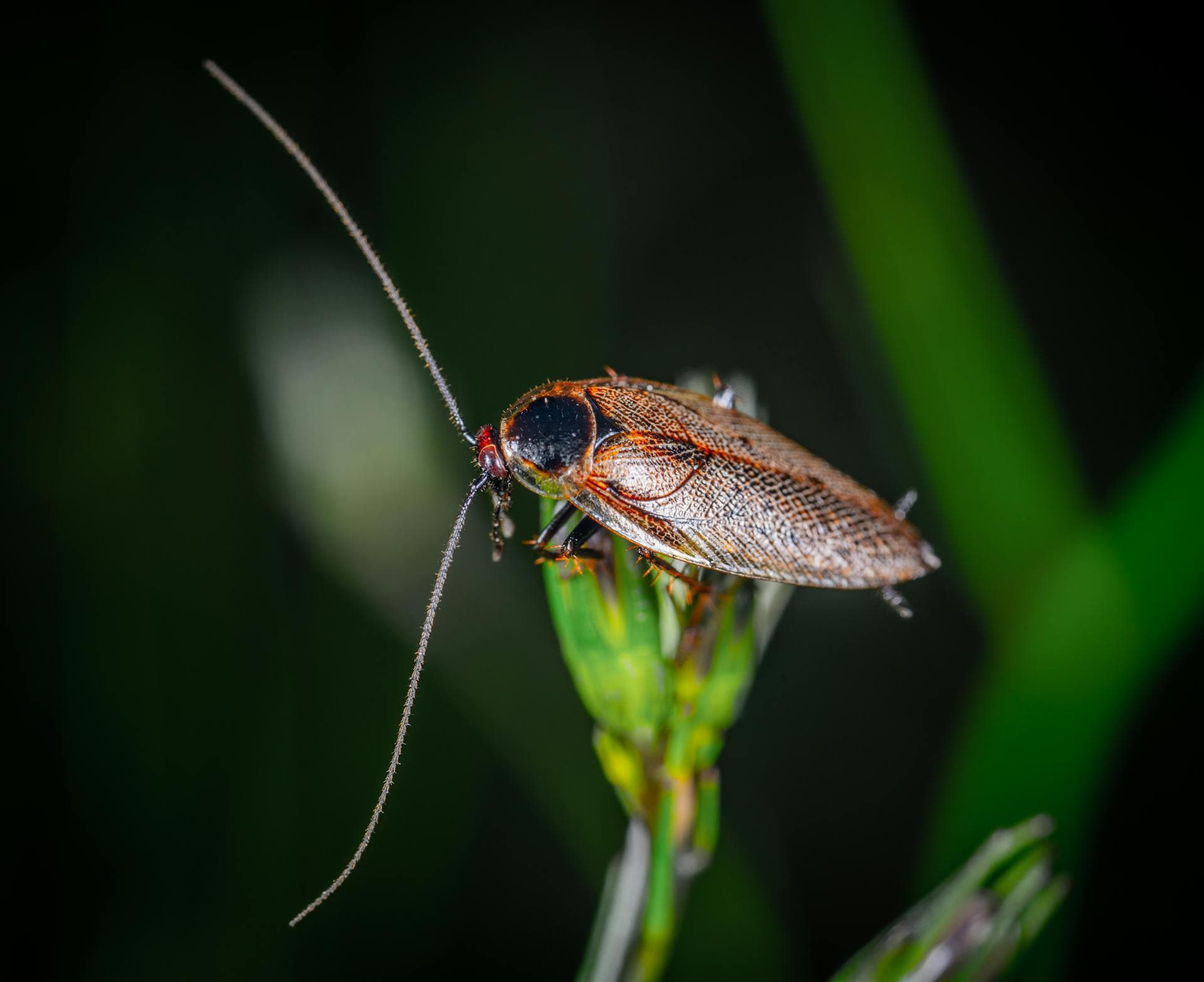
Cockroaches are the most common household pest complaint in Florida. According to the University of Florida's IFAS Extension, the German cockroach and the American cockroach are the two most abundant cockroach species in the state.
American Cockroach ("Palmetto Bug")
Scientific name: Periplaneta americana
The American cockroach is what most Floridians call a "palmetto bug." According to UF/IFAS, it's the largest of the common household cockroaches, averaging about 1.5 inches in length. Adults are reddish-brown with a yellowish figure-eight pattern on the back of the head.
Where you'll find them: American cockroaches prefer warm, moist environments. In St. Augustine homes, they're commonly found in basements, crawl spaces, around drains and sewer connections, and in mulch beds near the foundation. They're both indoor and outdoor pests — in the historic neighborhoods near the Bayfront and Lincolnville, the mature landscaping and older construction provide ideal harborage.
When to worry: Occasional palmetto bugs entering from outside are normal in Florida. If you're seeing them regularly indoors — especially during the day — you may have a moisture issue or an established population that needs professional cockroach control.
German Cockroach
Scientific name: Blattella germanica
The German cockroach is, according to UF/IFAS, "the most important pest species of cockroach in the United States, as well as the world." Unlike palmetto bugs, German cockroaches are strictly indoor pests — they cannot survive outside and are entirely dependent on human structures.
How to identify: Much smaller than American cockroaches at about 1/2 to 5/8 inch long, light brown with two dark stripes running lengthwise behind the head. They have wings but do not fly.
Why they're dangerous: German cockroaches reproduce rapidly — females produce 4 to 8 egg cases with 30 to 40 eggs each, and can go through 3 to 4 generations per year. UF/IFAS also notes they produce allergens that are "one of the leading causes of allergies, asthma and other bronchial disorders in humans."
Where you'll find them: Kitchens and bathrooms, near sinks, dishwashers, refrigerators, and any area with warmth and moisture. German cockroach infestations require professional treatment — DIY methods rarely eliminate established populations.
Ants
Florida is home to dozens of ant species, and several are major household pests. A UF/IFAS survey found that the top pest ant species reported by Florida pest control companies included fire ants, ghost ants, crazy ants, and carpenter ants.
Fire Ants
Scientific name: Solenopsis invicta (Red Imported Fire Ant)
Fire ants are impossible to miss in St. Augustine — their mounds appear in yards, parks, and landscaping beds throughout the 32080, 32084, and 32086 zip codes. Workers are small (1/8 to 1/4 inch) and reddish-brown with a darker rear section.
Why they're dangerous: According to UF/IFAS, approximately 95% of fire ant venom is composed of alkaloids that cause intense pain and white pustules lasting up to 10 days. For some individuals, stings can trigger life-threatening anaphylactic shock.
What to do: Individual mound treatments provide temporary relief, but fire ants will simply relocate. Professional ant control using broadcast baits is more effective for long-term management, especially in neighborhoods like Nocatee, World Golf Village, and Palencia where new construction disturbs existing colonies.
Ghost Ants ("Sugar Ants")
Scientific name: Tapinoma melanocephalum
Ghost ants are one of the most frustrating indoor ant pests in Florida. According to UF/IFAS, they were elevated to major pest status by 1995 and are now common throughout central and southern Florida — including Northeast Florida.
How to identify: Extremely small (about 1.5 mm), with a dark brown head and thorax but a pale, almost translucent abdomen and legs — giving them a "ghost-like" appearance. They emit a musty odor when crushed.
Where you'll find them: Ghost ants have a high need for moisture and are most commonly seen trailing along kitchen counters, around sinks, and in bathrooms. They nest outdoors and forage inside, making them difficult to eliminate without treating both the interior trails and outdoor nesting sites.
Carpenter Ants
Carpenter ants are the largest ant species you'll encounter in St. Augustine homes. Unlike termites, they don't eat wood — they excavate it to create nesting galleries, particularly in wood that's already damaged by moisture or decay.
When to worry: If you're seeing large (1/4 to 1/2 inch) black or dark-colored ants indoors, especially near windows, doors, or in bathrooms, you may have a carpenter ant colony in your walls. In older homes throughout the Historic District and Davis Shores, carpenter ants can cause real structural damage to moisture-softened wood. A professional inspection can determine the extent of the problem.
Spiders
Most spiders found in St. Augustine homes are harmless — and actually beneficial, since they eat other pests. However, a few species warrant attention.
Southern Black Widow
Scientific name: Latrodectus mactans
The southern black widow is found throughout Florida, including St. Augustine. According to UF/IFAS, their venom contains the neurotoxin alpha-latrotoxin. Those at highest risk from bites are the very young, the elderly, and people with high blood pressure.
How to identify: Shiny, jet-black body with a distinctive bright red hourglass marking on the underside of the abdomen. Females are about 1.5 inches including leg span.
Where you'll find them: Black widows prefer dark, undisturbed spaces — garages, sheds, woodpiles, under outdoor furniture, and in crawl spaces. They build messy, irregular webs close to the ground. UF/IFAS notes that they are "shy and non-aggressive, and bites rarely occur unless the spider is taunted or accidentally crushed."
Brown Recluse — NOT Established in Florida
This is one of the most common pest myths in Florida. According to UF/IFAS entomologists, "no breeding populations of any species of recluse spiders have been found in any Florida county in a native habitat." Only about 20 verified specimens have ever turned up in Florida — typically transported from Midwestern states in luggage or cargo.
If you think you've seen a brown recluse in your St. Augustine home, it's far more likely a southern house spider, huntsman spider, or wolf spider — all of which are harmless.
Wolf Spiders
Wolf spiders are very common in Florida and are frequently found in homes, especially at ground level. The Carolina wolf spider can reach 1 to 1.5 inches in body length, making encounters startling — but they are not dangerous to humans.
Wolf spiders don't spin webs. They're active ground hunters that may wander indoors through gaps under doors. If you're seeing them regularly, it may indicate other pest populations (their food source) nearby.
Silverfish
Scientific name: Lepisma saccharina
Silverfish are small (about 1/2 to 3/4 inch), silver-gray, carrot-shaped insects with long antennae and three bristle-like tails. According to UF/IFAS, they prefer areas with high humidity and little airflow — making Florida homes ideal habitat.
Where you'll find them: Bathrooms, closets, attics, and anywhere paper or cardboard is stored. Silverfish feed on materials high in starches and cellulose — paper, book bindings, wallpaper paste, and even clothing.
What to do: Reducing humidity is the most effective silverfish control. Use dehumidifiers in damp areas, fix leaky pipes, and reduce paper storage in humid spaces. For persistent infestations, a professional can apply targeted treatments in harborage areas.
Mosquitoes
While not a "bug in your home" in the traditional sense, mosquitoes are a major pest concern for St. Augustine homeowners — and they absolutely come indoors through open doors, torn screens, and gaps.
According to the Florida Department of Health in St. Johns County, mosquito-borne diseases actively monitored in the area include West Nile Virus and Eastern Equine Encephalitis (EEE). St. Johns County has had confirmed cases of both in recent years.
The coastal marshes near Vilano Beach, the Matanzas River corridor, and the low-lying areas of Anastasia Island all create prime mosquito breeding habitat. Professional mosquito barrier treatments can significantly reduce populations around your property.
Drain Flies
If you've noticed tiny, fuzzy, moth-like flies resting on your bathroom walls, you're likely dealing with drain flies (Psychoda spp.). According to UF/IFAS, these small insects breed in the film of organic material that accumulates inside drains.
Drain flies don't bite, sting, or transmit diseases — they're primarily a nuisance. The simplest fix is cleaning the organic buildup in your drains. If they persist despite cleaning, there may be a broken drain line or hidden moisture source that needs attention.
When to Call a Professional Exterminator
Some pests are manageable with DIY prevention — sealing entry points, reducing moisture, keeping a clean kitchen. But certain situations require professional help:
- German cockroach infestations — These breed so rapidly that store-bought sprays can't keep up. Professional treatment using gel baits and IGRs (insect growth regulators) is needed.
- Carpenter ant activity — If large ants are emerging from walls or you find sawdust-like debris (frass), you may have structural damage that needs assessment.
- Recurring ant trails despite cleaning and sealing — The colony is likely nearby and needs professional baiting.
- Any venomous spider concerns — While rare, a professional can assess your property and reduce harborage.
- Persistent drain flies or fungus gnats — May indicate hidden plumbing issues.
- Fire ant mounds in high-traffic areas — Professional broadcast treatments are safer and more effective than DIY mound treatments, especially in yards where children and pets play.
Protect Your St. Augustine Home
Florida's pest diversity means there's always something new trying to get into your home. The good news is that most household pests in St. Augustine are manageable with the right approach — a combination of prevention, identification, and targeted professional treatment when needed.
Bug Mechanix provides expert pest control for homeowners throughout St. Augustine, St. Augustine Beach, Ponte Vedra, and all of St. Johns County. Not sure what you're dealing with? Call (718) 873-7908 for a free inspection. We'll identify the pest, explain the best treatment approach, and give you a clear plan to keep your home pest-free.
Need Pest Control Help?
Call Bug Mechanix for fast, effective treatment in Northeast Florida.