
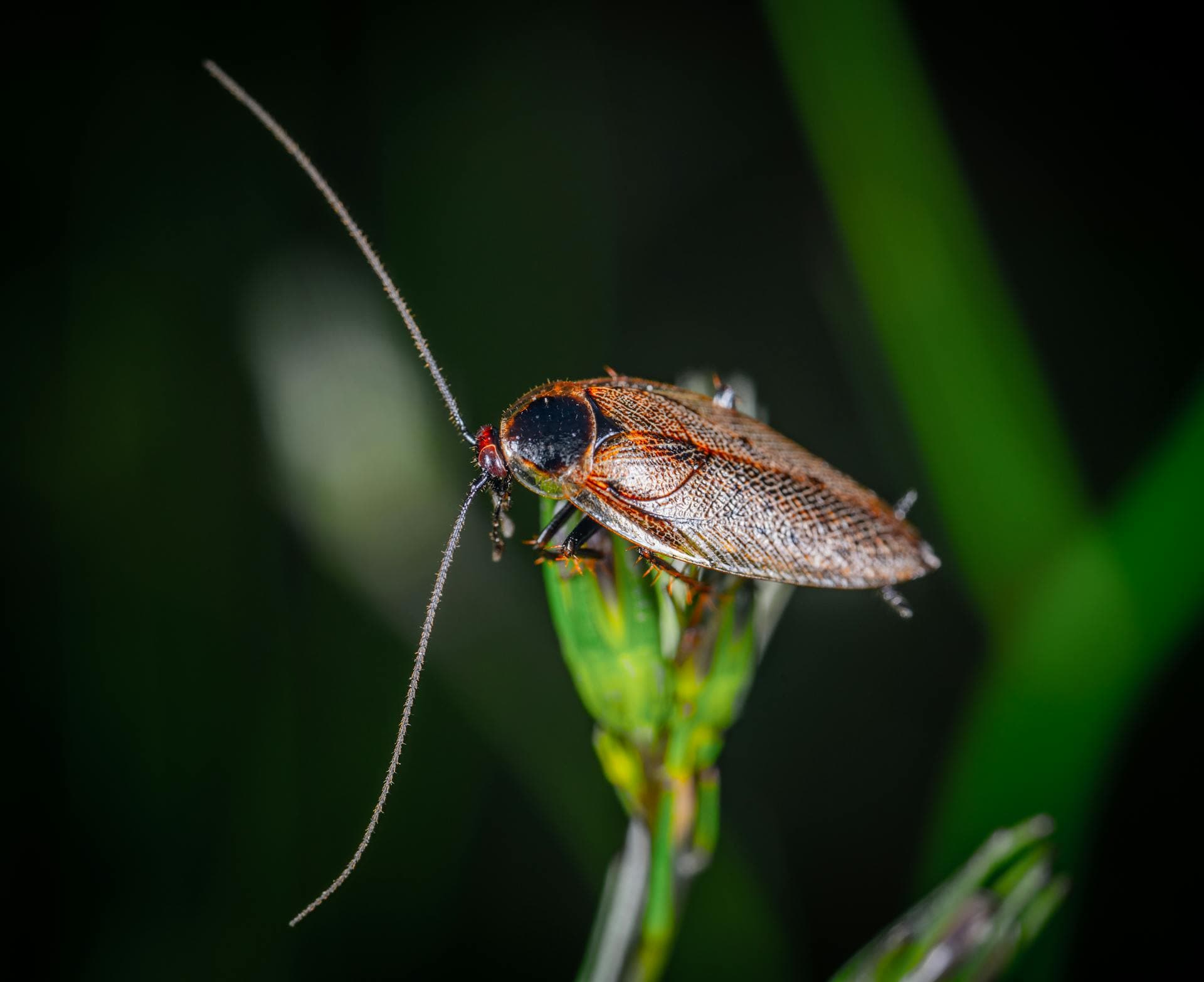
Let's Be Honest: It's a Cockroach
In St. Augustine and across the Southeast, the term "palmetto bug" gets thrown around a lot. As University of Georgia entomologist Dan Suiter put it bluntly: "People will say they have palmetto bugs, but it's just a nice way to say cockroach."
Whether you call them palmetto bugs, water bugs, or flying monsters, they're cockroaches — and Florida has more of them than almost anywhere else in the country. The state is home to at least seven common household cockroach species, and St. Augustine's warm, humid climate keeps them active year-round.
Understanding which species you're dealing with is the first step toward getting rid of them.
Which Cockroaches Are "Palmetto Bugs"?
The term "palmetto bug" is typically applied to three large cockroach species, all of which are common in St. Augustine:
American Cockroach (Periplaneta americana)
The most common species homeowners encounter indoors and call a "palmetto bug." Despite the name, the American cockroach likely originated in Africa and was introduced to the Americas via trade ships as early as 1625.
- Size: 1.5 to 2 inches long — the largest common household cockroach
- Color: Reddish-brown with a yellowish margin on the pronotum (the shield behind the head)
- Can it fly? Yes, but it's more of a short glide than sustained flight — more common in warm climates like Florida
- Speed: Can run at 1.5 meters per second (about 3.4 mph) by rearing up on its two hind legs — roughly 50 body lengths per second
Florida Woods Cockroach (Eurycotis floridana)
Arguably the "true" palmetto bug, since the name likely originated from this species' habit of living under palmetto leaves.
- Size: 1.2 to 1.6 inches long
- Color: Dark reddish-brown to black
- Can it fly? No — adults have only short wing pads
- Unique feature: When threatened, it can eject a foul-smelling chemical spray up to 1 meter (3.3 feet), earning it the nicknames "Florida stinkroach" and "skunk cockroach"
Smokybrown Cockroach (Periplaneta fuliginosa)
The strongest flier of the three — and the one most likely to fly directly at you.
- Size: 1.25 to 1.5 inches long
- Color: Uniformly dark brown to mahogany
- Can it fly? Yes, and it's attracted to lights at night, often flying through open doors and windows
- Key trait: Requires constant moisture and is most active after dark
Important distinction: The term "palmetto bug" is never applied to German cockroaches, which are much smaller (about half an inch) and live exclusively indoors. German cockroaches indicate a different — and often more serious — infestation that requires a different treatment approach.
Palmetto Bugs vs. German Cockroaches: Why It Matters
Knowing which species you're dealing with determines how to treat the problem:
| Feature | Palmetto Bugs (American/Smokybrown) | German Cockroaches |
|---|---|---|
| Size | 1.5–2 inches | 0.5–0.625 inches |
| Primary habitat | Outdoors — trees, mulch, woodpiles | Exclusively indoors |
| Where found inside | Basements, crawl spaces, floor drains | Kitchens, bathrooms, behind appliances |
| Eggs per case | 14–16 | 30–48 |
| Time to maturity | ~600 days (20 months) | ~60 days |
German cockroaches reproduce far faster, which is why a small indoor infestation can explode quickly. Palmetto bugs reproduce more slowly but are nearly impossible to fully eliminate outdoors in Florida — the goal is keeping them outside where they belong.
Why Palmetto Bugs Are Everywhere in St. Augustine
Florida's climate is essentially cockroach paradise:
- Temperature: American cockroaches prefer temperatures around 84°F — close to St. Augustine's average summer temperature
- Humidity: Florida's summer dew points typically run in the high 60s to low 70s°F, providing the moisture cockroaches need
- Mild winters: Unlike northern states where cold winters kill outdoor populations, Northeast Florida's mild winters allow year-round outdoor breeding
- Abundant habitat: Palm trees, Spanish moss, pine straw mulch, dense vegetation, and organic debris throughout neighborhoods from downtown St. Augustine to Nocatee provide virtually unlimited harborage
Palmetto bugs primarily live outdoors — in trees, tree holes, woodpiles, under bark, under palmetto leaves, garden borders, railroad ties, and especially in pine straw mulch. They come inside when they're seeking moisture during dry spells, warmth when temperatures drop, or when they're attracted to lights at night (especially smokybrown cockroaches).
Health Risks You Shouldn't Ignore
Palmetto bugs aren't just unsettling — they pose real health risks:
Allergens and Asthma
Cockroach feces, shed skins, and saliva contain potent allergens. According to the National Institute of Environmental Health Sciences, cockroach allergens are detected in 85% of inner-city U.S. homes.
A landmark study published in the New England Journal of Medicine found that children who were both allergic to cockroach allergens and exposed to high levels had 3.3 times more hospitalizations compared to other asthmatic children. The prevalence of cockroach allergy ranges from 17–41% across studies of U.S. children and adults.
Bacteria and Pathogens
Cockroaches can carry approximately 50 species of pathogenic bacteria, including Salmonella, E. coli, and Staphylococcus aureus. A 2020 review found evidence that cockroaches may serve as active biological vectors, with Salmonella Typhimurium actually replicating inside the cockroach gut. In hospital settings, up to 98% of cockroaches were found carrying medically important microorganisms.
They transmit these pathogens by walking across food preparation surfaces, utensils, and exposed food — leaving bacteria from their bodies and fecal deposits behind.
How to Keep Palmetto Bugs Out of Your Home
Since palmetto bugs primarily live outdoors, the strategy is preventing them from getting inside. Here's what actually works, based on UF/IFAS recommendations:
Seal Entry Points
Adult cockroaches can fit through cracks as narrow as 1/16 inch. Focus on:
- Caulk around pipe penetrations, utility line entries, and sewer connections
- Install door sweeps and weather stripping on exterior doors
- Repair damaged window screens and cover vents with fine mesh
- Seal gaps around AC units and dryer vents
- Check where cable and phone lines enter the home — especially in older St. Augustine homes where gaps are common
Eliminate Outdoor Harborage
This is critical in Northeast Florida yards:
- Replace pine straw mulch near your foundation with gravel — UF/IFAS research shows cockroaches breed prolifically in pine straw but poorly in gravel or bare soil. Maintain at least a 6–12 inch gravel border around your home.
- Trim vegetation away from the house — ivy is a favorite breeding place for outdoor cockroaches
- Stack firewood off the ground and away from the house
- Remove leaf litter and organic debris from around the foundation
- Fill tree holes with cement to eliminate harborage
Reduce Moisture
- Fix leaking pipes and faucets — palmetto bugs enter homes primarily for water
- Maintain indoor humidity between 30–50% using dehumidifiers in crawl spaces and bathrooms
- Ensure proper drainage away from your foundation
Reduce Food Sources
- Store food in sealed containers
- Clean up crumbs and spills promptly
- Don't leave pet food out overnight
- Keep garbage in sealed containers
Professional Treatment: What Actually Works
For homes in St. Augustine, Jacksonville, Ponte Vedra, and throughout St. Johns County, professional cockroach control follows an Integrated Pest Management (IPM) approach recommended by the EPA:
Perimeter Treatments — Residual liquid insecticide applied within 3 feet of your home's foundation, targeting pine straw, fallen leaves, garden borders, and other harborage areas where palmetto bugs hide during the day.
Gel Bait Applications — Applied directly into cracks, crevices, and harborage areas. According to Purdue Extension research, numerous smaller bait placements provide faster cockroach control than fewer larger placements.
Dust Applications — Boric acid dust applied into wall voids, behind outlets, and in other enclosed spaces provides long-lasting control in areas baits can't reach.
Exclusion Work — Sealing entry points is a core part of professional treatment, not just a DIY tip.
Important note from UF/IFAS: Gel baits should not be applied to surfaces recently treated with residual insecticide sprays, as the spray renders the bait ineffective. This is why professional application matters — improper mixing of treatment methods can actually make the problem worse.
One More Thing: They Can Reproduce Without Mating
Here's a fact that might keep you up at night: female American cockroaches are capable of parthenogenesis — they can produce viable offspring without ever mating. A single female cockroach that finds her way into your home can potentially start a population on her own.
Each female produces 9–10 egg cases over her lifetime, with each case containing 14–16 eggs. Adults can live up to 15 months. That's a lot of potential palmetto bugs from a single intruder.
Get Professional Help
Palmetto bugs are a fact of life in St. Augustine — but they don't have to be a fact of life inside your home. Professional perimeter treatments, combined with proper exclusion and habitat modification, dramatically reduce the number that make it through your door.
At Bug Mechanix, we treat homes throughout St. Augustine, Ponte Vedra, Nocatee, World Golf Village, and all of Northeast Florida with targeted cockroach control that works. We'll inspect your property, identify entry points, and create a treatment plan that keeps palmetto bugs where they belong — outside.
Call (718) 873-7908 or request a free quote to take back your home from palmetto bugs.
Need Pest Control Help?
Call Bug Mechanix for fast, effective treatment in Northeast Florida.