
Florida's Rodent Problem Is Bigger Than You Think
If you're hearing scratching in your attic at night or finding small dark droppings in your garage, you're not alone. According to the NPMA, nearly one-third of Americans have had a rodent problem in their home, and 21 million U.S. homes are invaded by rodents every winter.
In Northeast Florida, the problem is year-round. Florida's subtropical climate is similar to the native habitat of roof rats and Norway rats, enabling them to survive and reproduce in every season. There's no winter freeze to thin the population here in St. Augustine, Jacksonville, or anywhere in St. Johns County.
According to the EPA, rodents spread more than 35 diseases. They're not just a nuisance — they're a genuine health and safety threat.
Know Your Enemy: Florida's Three Problem Rodents
Roof Rat (Rattus rattus)
The worst rodent pest in the state of Florida and the most abundant, according to UF/IFAS. Also called the black rat or citrus rat.
- Size: 6–8 inches (body), with a tail longer than the body
- Color: Black to brownish-gray with a lighter belly
- Droppings: About 1/2 inch long, spindle-shaped with pointed ends
- Behavior: Excellent climbers that live in attics, trees, and elevated spaces. They're the most detrimental rodent pest to fruit crops in Florida and breed year-round in Florida with peak activity in spring and fall
- Litter size: 5–8 pups, with 4–6 litters per year
If you're hearing noises in your attic in St. Augustine, Nocatee, or Ponte Vedra, it's most likely a roof rat.
Norway Rat (Rattus norvegicus)
Larger and more aggressive than roof rats.
- Size: 7–9.5 inches (body), with a shorter, thicker tail
- Color: Brown with scattered black hairs, grayish-white belly
- Droppings: About 3/4 inch long, capsule-shaped with blunt ends
- Behavior: Ground-level burrowers that dig under buildings, concrete slabs, and in rubbish. More aggressive than roof rats and will drive them from territory. Stay within 300 feet of their nest
- In Florida, most common along sea coasts and canals — making waterfront areas of St. Augustine particularly susceptible
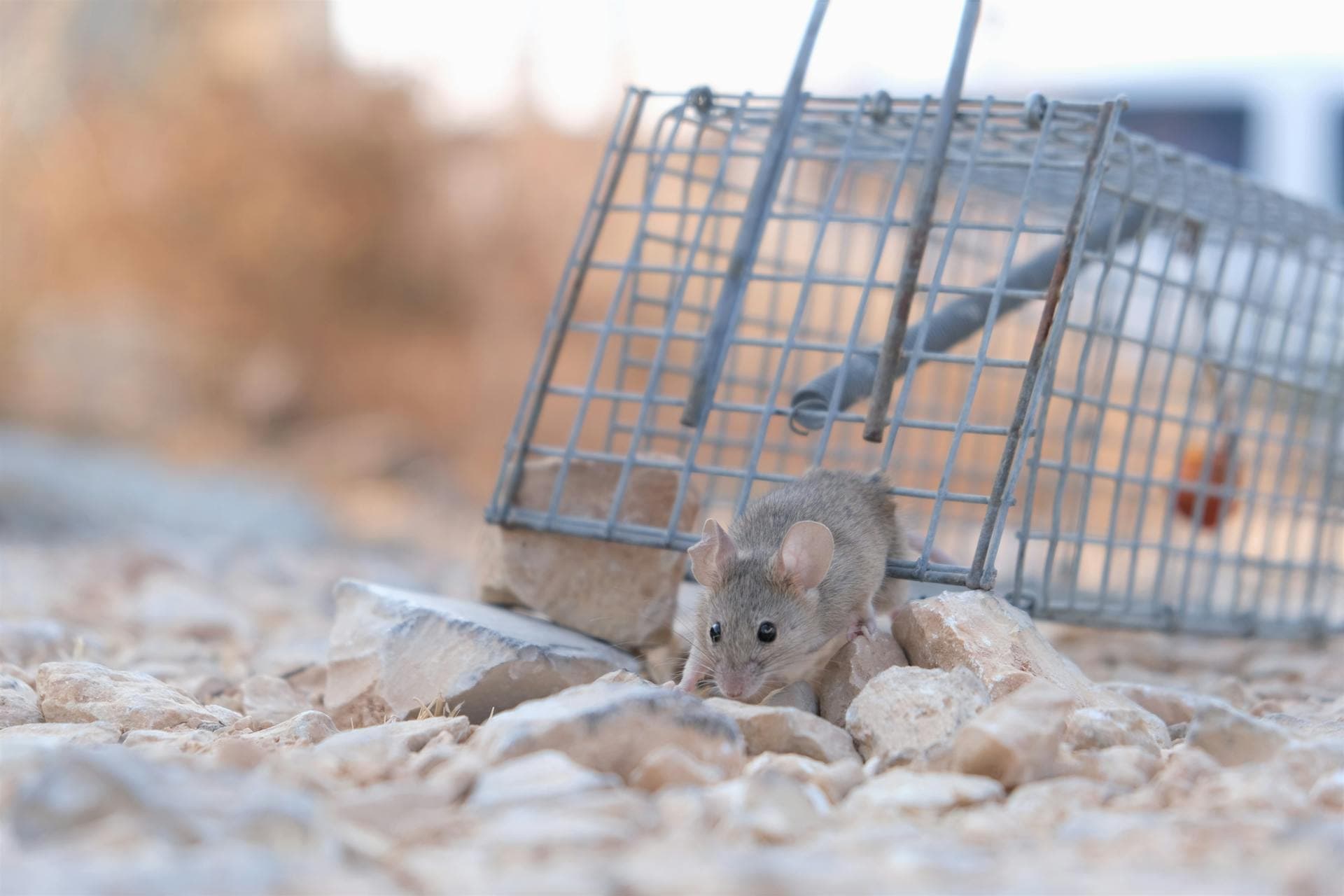
House Mouse (Mus musculus)
Small but prolific.
- Size: 2.5–3.75 inches (body), dusty gray with cream belly
- Droppings: 1/8 to 1/4 inch, rod-shaped with pointed ends
- Behavior: Can jump up to a foot high and normally lives within just 4–5 feet of its nest. Reaches sexual maturity in just 6 weeks and can produce up to 8 litters per year
- A single mouse produces 40–100 droppings per day and constantly releases micro-droplets of urine as it moves
UF/IFAS lists roof rats among the top eight invasive species that invade Florida households. The UF/IFAS Extension office in Duval County (Jacksonville) publishes specific rodent control guidance for the Northeast Florida region — that's how serious the problem is locally.
Signs You Have Rodents
Watch for these indicators, per the EPA and UF/IFAS:
- Droppings — Size tells you what you're dealing with: mouse (1/8"), roof rat (1/2"), Norway rat (3/4")
- Gnaw marks — On food packaging, wood, drywall, and wiring. Rodent teeth grow 4.5–5.5 inches per year, so they gnaw constantly to keep them short
- Greasy rub marks — Black smudges on walls left by rodent fur along travel paths
- Sounds — Scratching or scurrying noises in attic or walls, especially at night
- Nesting material — Shredded paper, fabric, or dried plant matter in hidden areas
- Stale odors — Musty smells from hidden areas where rodents nest
To confirm an active infestation, the CDC recommends cleaning the area and checking if new droppings appear.
The Real Dangers: Health Risks and Property Damage
Disease Transmission
Rodents spread diseases through direct contact with droppings, urine, saliva, and bites, plus indirectly through ticks, mites, and fleas that feed on infected rodents:
- Hantavirus Pulmonary Syndrome — Spread through infected rodent urine, feces, and saliva. Has a case fatality rate of approximately 36–38% — nearly 4 in 10 people who develop respiratory symptoms die.
- Leptospirosis — Caused by bacteria spread through rodent urine. An estimated 1 million cases occur globally each year, causing nearly 60,000 deaths. Without treatment, it can lead to kidney damage, meningitis, liver failure, and death.
- Salmonella — Rodents contaminate food through their droppings. Roof rats specifically are known carriers.
- Rat-Bite Fever — Transmitted through bites, scratches, or contact with infected rodents. Symptoms begin 3–10 days after contact and include fever, vomiting, muscle pain, and rash.
- Lymphocytic Choriomeningitis (LCM) — Spread by the common house mouse. Especially dangerous for pregnant women — infections can cause fetal death or birth defects.
In Florida, roof rats can also spread rat lungworm and murine typhus.
Property Damage
- Fire risk: Rodents are estimated to cause 20–25% of all fires of unknown cause by chewing through electrical wiring
- Structural damage: They gnaw through drywall, wood, plastic, and even lead pipes
- Attic destruction: Roof rats can be quite destructive in attics, gnawing on electrical wires and rafters
- Food contamination: They consume and destroy stored food for both humans and pets
How They Get In
The entry points are smaller than you'd think:
- Mice can fit through a hole the size of a dime — approximately 1/4 inch
- Rats can fit through a hole the size of a quarter — approximately 1/2 inch
Common entry points in Northeast Florida homes include gaps around pipes and wires, cracks in foundations, roof vents and plumbing vent stacks, gaps around attic vents, and openings where porches or patios meet the house.
Roof rats in particular use overhanging tree limbs as highways to gain entrance — a common issue in St. Augustine's tree-covered neighborhoods.
Professional Rodent Control: The Right Approach
The CDC recommends a three-step framework: Seal Up, Trap Up, Clean Up. UF/IFAS recommends a similar four-step approach: exclusion, sanitation, trapping, then baiting. Both emphasize that exclusion — physically blocking entry points — must come first.
Step 1: Exclusion (Seal Up)
The most important step. All entry points larger than a dime must be sealed:
- Small holes: fill with steel wool and caulk, or spray foam
- Larger holes: use hardware cloth (19 gauge or heavier, no openings larger than 1/4 inch), sheet metal, or concrete
- Trim tree branches away from the roofline — this is essential in Florida where roof rats use overhanging limbs as access points
Step 2: Trapping
The CDC recommends snap traps and advises against glue traps and live traps, which can cause rodents to urinate and increase disease risk. Best practices:
- Use chunky peanut butter or mutton fat as bait
- Place traps along walls with the baited end against the wall, forming a "T"
- For rats, pre-bait traps without setting them first to build comfort
- Check traps daily and continue until no rodents are caught for a week
Step 3: Baiting (When Needed)
Professional-grade rodenticides are significantly more effective than consumer products. Since 2011, second-generation anticoagulants (the most effective rodenticides) are only available to professional applicators. The EPA has also banned mouse and rat poisons in pellet form for consumer use.
Professional bait stations must be tamper-resistant when placed in areas accessible to children and non-target animals. All bait blocks are secured inside locked stations that are themselves secured to the ground or structure.
Step 4: Clean Up
After rodents are eliminated, safe cleanup and disinfection of contaminated areas is essential. This includes removing droppings, nesting material, and contaminated insulation from attics — a common issue in St. Augustine homes where roof rats have been nesting.
Prevention Tips for Northeast Florida Homeowners
- Trim trees and shrubs — Keep branches at least 4 feet from your roofline. Roof rats use them as highways into your attic.
- Store fruit properly — Pick citrus and other fruit promptly. Fallen fruit attracts roof rats — they're called "citrus rats" for a reason.
- Secure garbage — Use sealed containers with tight-fitting lids
- Eliminate water sources — Fix leaking outdoor faucets and eliminate standing water
- Store firewood away from the house and off the ground
- Keep your yard clean — Remove debris, leaf piles, and ground-level clutter that provides harborage
- Inspect your home regularly — Check for new gaps, cracks, or gnaw marks, especially around the roofline, foundation, and utility penetrations
When to Call a Professional
DIY rodent control has significant limitations. The most effective rodenticides are restricted to professional use only, and proper exclusion work requires experience identifying every possible entry point — miss one, and rodents will find it.
Call a professional if you:
- Hear persistent scratching or scurrying in your attic or walls
- Find rodent droppings in multiple areas of your home
- See gnaw marks on wiring, food packaging, or structural materials
- Smell persistent musty odors from hidden spaces
- Have a recurring problem despite setting traps yourself
- Live near wooded areas, waterways, or fruit trees common throughout St. Augustine, Jacksonville, and Ponte Vedra
At Bug Mechanix, we follow the CDC's recommended Seal Up, Trap Up, Clean Up approach for every rodent job throughout Northeast Florida. We identify entry points, perform professional exclusion, set targeted traps, and ensure your home stays rodent-free.
Call (718) 873-7908 or request a free quote to get rodents out of your home for good.
Need Pest Control Help?
Call Bug Mechanix for fast, effective treatment in Northeast Florida.