
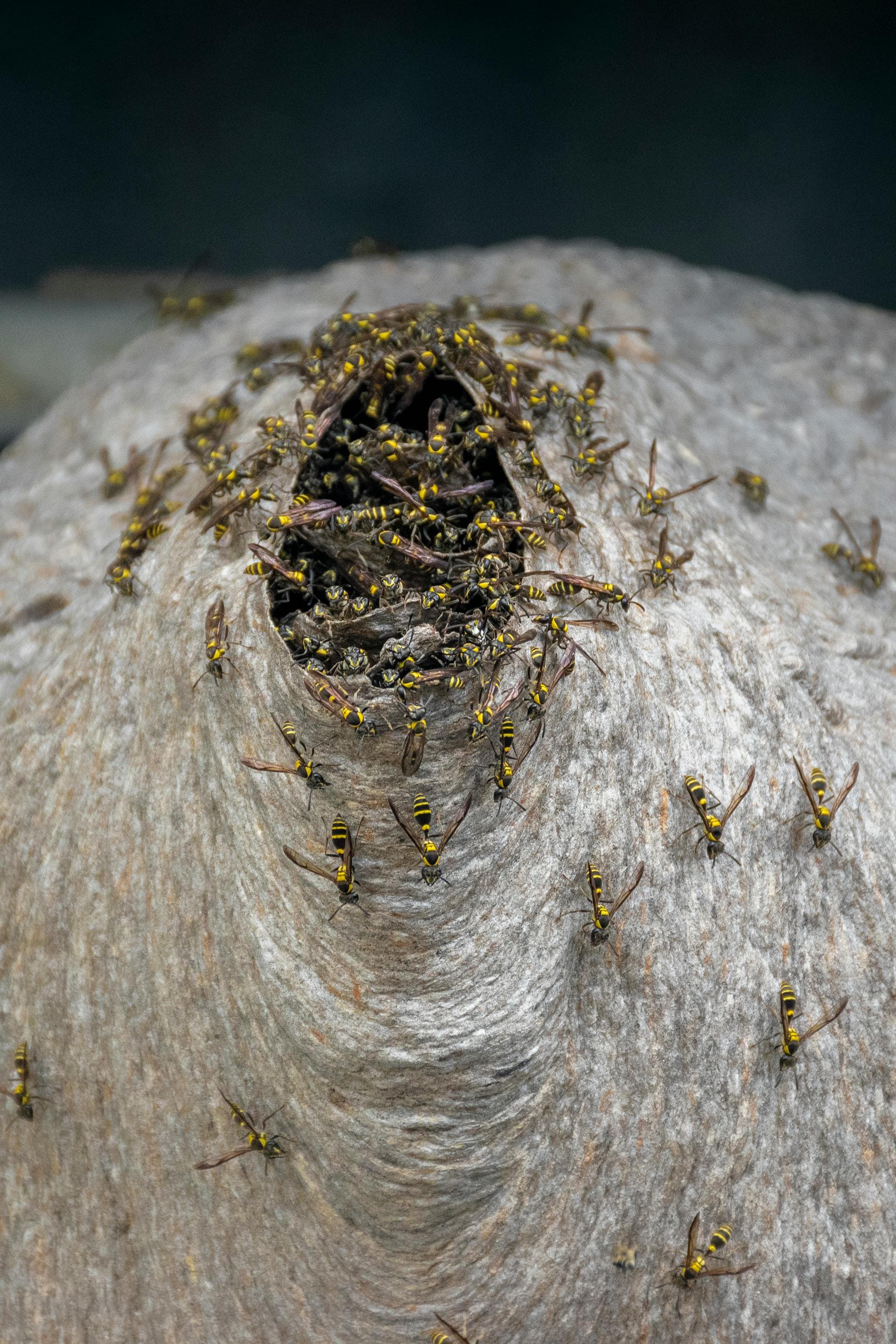
Wasp and bee removal is one of the most common calls we get at Bug Mechanix, especially from homeowners in St. Augustine, Anastasia Island, and the surrounding Northeast Florida neighborhoods. Whether it's a paper wasp colony building under your porch eaves or yellowjackets nesting in your yard near the Vilano Beach area, stinging insects are a serious safety concern that requires the right approach.
Not every wasp or bee encounter calls for the same response. Some species are aggressive and dangerous. Others are beneficial pollinators that should be relocated, not destroyed. And in Florida, there are specific laws governing how honey bees must be handled. Here's what every St. Augustine homeowner needs to know about wasp and bee removal.
Why Wasps and Bees Are So Active in St. Augustine
Florida's warm, humid climate makes Northeast Florida a haven for stinging insects. Unlike northern states where colonies die off each winter, Florida's mild temperatures allow certain wasp species to remain active year-round.
According to the University of Florida's IFAS Extension, wasp colonies begin in spring when overwintered queens emerge and start building nests. By summer, colonies are fully operational. Late summer and early fall is when wasps become most aggressive — colonies are at their largest, mating season begins, and food resources become scarcer.
What makes Florida especially challenging is that southern yellowjackets can form perennial colonies that survive through mild winters and grow much larger than typical annual colonies. According to UF/IFAS entomologists, these perennial nests in the southeastern U.S. can contain up to 100,000 adult wasps — compared to around 2,000 in a normal annual colony.
Common Wasp Species in St. Augustine
Paper Wasps
Paper wasps are the species you're most likely to encounter around your St. Augustine home. They build open, umbrella-shaped nests from chewed wood fibers, typically attached under eaves, porch ceilings, deck railings, and mailboxes.
According to the UF/IFAS Featured Creatures database, the red paper wasp (Polistes carolina) is one of the most common species in the eastern United States, including all of Florida. Paper wasps are semi-aggressive — they generally won't attack unprovoked, but they will sting repeatedly if they feel their nest is threatened.
Paper wasps are actually beneficial predators. They feed on caterpillars, beetle larvae, and other garden pests. However, when they build nests in high-traffic areas — doorways, porches, playsets, outdoor dining areas — they become a safety hazard that needs to be addressed.
Yellowjackets
Yellowjackets are among the most aggressive stinging insects in Florida. St. Augustine is home to two species: the eastern yellowjacket (Vespula maculifrons) and the southern yellowjacket (Vespula squamosa), according to UF/IFAS.
Unlike paper wasps that build visible aerial nests, yellowjackets typically nest underground — in abandoned rodent burrows, under landscaping timbers, or in loose soil. This makes them especially dangerous because you often don't know the nest is there until you step near it or run over it with a lawn mower.
When a yellowjacket is injured or crushed, it releases an alarm pheromone that triggers an aggressive swarm response from the entire colony. This is why yellowjacket encounters can escalate quickly from one sting to dozens.
Mud Daubers
Mud daubers are solitary wasps that build distinctive tube-shaped mud nests on the sides of buildings, under eaves, in garages, and in sheds throughout St. Augustine. According to UF/IFAS, the black and yellow mud dauber is one of the most common species in Florida.
The good news about mud daubers: they are not aggressive and rarely sting. They don't defend their nests the way social wasps do. In fact, the blue mud dauber (Chalybion californicum) is actually beneficial because its preferred prey is the southern black widow spider.
Mud dauber nests are primarily a cosmetic issue — the mud tubes can stain siding and look unsightly. They're generally safe to leave alone unless they're in a high-visibility area or you're concerned about the spiders they attract.
Baldfaced Hornets
The baldfaced hornet (Dolichovespula maculata) builds large, football-shaped paper nests in trees and shrubs. According to UF/IFAS, these nests can grow quite large over the course of a season and are often discovered when homeowners prune trees or clear vegetation — especially in neighborhoods near the Castillo de San Marcos area and the mature live oaks throughout the Historic District.
Baldfaced hornets are highly aggressive when their nest is disturbed. Like yellowjackets, injured hornets release alarm pheromones that trigger a colony-wide defensive attack. Professional removal is strongly recommended for any baldfaced hornet nest near your home or walkways.
Honey Bees in Florida: Know the Law
Honey bees are different from wasps, and in Florida, they're handled differently by law. Under Florida Statute Chapter 586, honey bees are regulated by the Florida Department of Agriculture and Consumer Services (FDACS).
According to FDACS guidelines, when a feral or nuisance honey bee colony is found nesting near people or animals, it should be either removed alive by a registered beekeeper or eradicated by a licensed pest control operator. Only PCOs holding a General Household Pest or Lawn & Ornamental license may perform eradication, and they must remove all dead bees and comb from the property.
If you find honey bees nesting in your walls, soffit, or another part of your St. Augustine home, don't try to seal the entrance or spray them yourself. This can trap bees inside your walls, leading to a larger problem. Contact a professional who can assess whether live removal or eradication is the best option.
When to Call a Professional for Wasp Removal
Not every wasp nest requires professional treatment. A small paper wasp nest on an unoccupied shed — where nobody walks nearby — may not pose a threat. But you should call a professional wasp and bee removal service when:
- The nest is near an entrance, porch, or high-traffic area where people pass regularly
- You or a family member has a known allergy to insect stings — according to the American College of Allergy, Asthma & Immunology, potentially life-threatening reactions to insect venom occur in 0.4% to 0.8% of children and 3% of adults
- You've found yellowjackets or ground-nesting wasps — disturbing these nests without proper equipment is extremely dangerous
- The nest is in a wall void, attic, or other enclosed space — these require specialized treatment to ensure the colony is fully eliminated
- The nest is large or well-established — a colony that has been growing for weeks or months will be highly defensive
- You're dealing with honey bees — Florida law requires proper handling by a licensed professional or registered beekeeper
The CDC reports that hornet, wasp, and bee stings caused an average of 72 deaths per year in the United States between 2011 and 2021. Most fatal reactions happen within minutes of being stung. This isn't a situation where DIY solutions are worth the risk.
How Bug Mechanix Handles Wasp and Bee Removal
At Bug Mechanix, our approach to wasp and bee removal in St. Augustine depends on what we find during inspection:
Assessment First
We identify the species, locate the nest, and evaluate the situation. Different species require different approaches. A paper wasp nest under your eave is treated differently than yellowjackets nesting in your yard or honey bees in your wall.
Targeted Treatment
For wasps, we use targeted products applied directly to the nest and entry points. This eliminates the colony while minimizing exposure to non-target areas. We treat in the early morning or evening when wasps are less active and most of the colony is in the nest.
Nest Removal
After treatment, we remove the nest when it's accessible. Leaving an empty nest can actually attract new colonies — other wasps may try to repurpose the structure. We also identify and seal potential nesting sites to reduce the chance of future activity.
Honey Bee Referral
When we encounter honey bees, we follow Florida's guidelines and coordinate with local registered beekeepers for live removal when possible. If eradication is necessary, we follow all FDACS requirements, including complete removal of dead bees and comb.
Preventing Wasp Nests Around Your St. Augustine Home
Prevention is always better than emergency removal. Here are practical steps to reduce wasp activity around your property:
Around the exterior:
- Inspect eaves, soffits, porch ceilings, and overhangs regularly for new nest construction — catching nests early (when they're small and have few wasps) is much safer and easier
- Seal gaps around windows, doors, utility penetrations, and roof joints
- Keep outdoor trash cans tightly sealed — wasps are attracted to sugary residues and protein-based food waste
- Avoid leaving pet food or sugary drinks outdoors
In your yard:
- Be cautious when mowing, especially near landscaping borders and mulched areas where yellowjackets nest
- Fill in abandoned animal burrows that could become yellowjacket nest sites
- Keep fallen fruit cleaned up under trees
Ongoing protection: Our quarterly maintenance plans include exterior inspections for new wasp activity and preventive treatments around common nesting sites. Regular service catches nests early before they become a problem — which is especially important during peak wasp season from late summer through fall.
Protect Your St. Augustine Home from Stinging Insects
Wasps and bees are a fact of life in Northeast Florida. With year-round warm temperatures, properties across St. Augustine, Davis Shores, St. Augustine Beach, and Ponte Vedra see consistent stinging insect activity from spring through fall — and sometimes well into winter.
The key is knowing when a nest is harmless and when it's a genuine safety hazard. When in doubt, don't risk it. A professional assessment takes minutes and can prevent a dangerous encounter.
Call Bug Mechanix at (718) 873-7908 for fast wasp and bee removal in St. Augustine and throughout Northeast Florida. We'll identify the species, safely remove the nest, and help prevent future nesting activity. Free estimates available.
Need Pest Control Help?
Call Bug Mechanix for fast, effective treatment in Northeast Florida.