
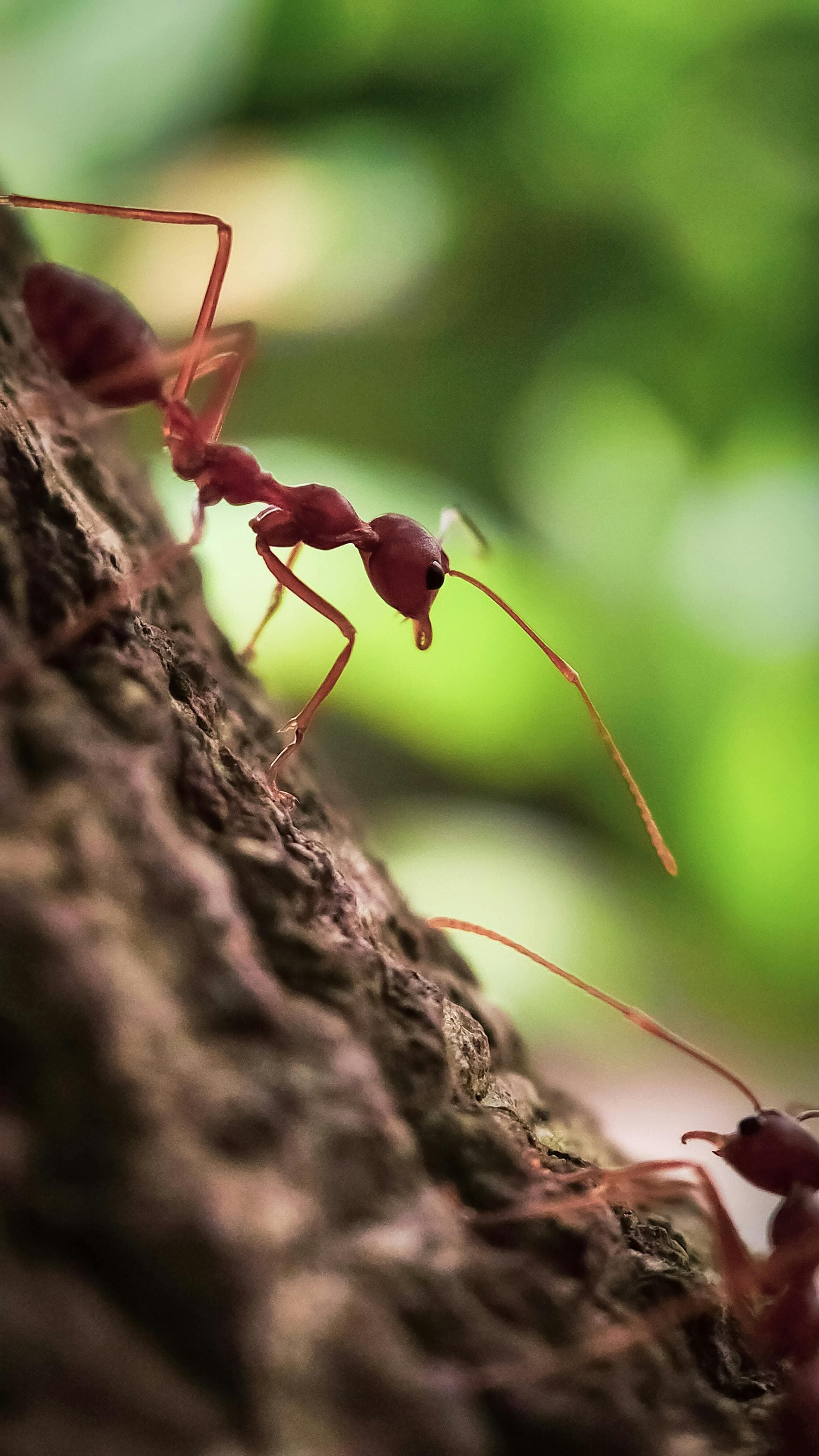
If you've lived in St. Augustine for any length of time, you've probably stepped on a fire ant mound — and you definitely remember the experience. That instant, burning pain followed by itchy white pustules that last for days is unmistakable.
But fire ants are far more than a painful nuisance. In Florida, they're a serious health risk, a property threat, and an invasive species that professional pest control is specifically designed to manage.
How Fire Ants Got to Florida
The red imported fire ant (Solenopsis invicta) is native to South America. According to the UF/IFAS Entomology Department, they were first introduced into the United States — likely through either Mobile, Alabama, or Pensacola, Florida — between 1933 and 1945, traveling in the ballast of cargo ships.
From there, they spread aggressively. Today, the USDA reports that red imported fire ants infest more than 367 million acres across 14 states and Puerto Rico. The entire state of Florida falls within the federal imported fire ant quarantine zone, including St. Johns County and all of Northeast Florida.
Fire ants spread through mating flights (queens can fly over a mile with wind assistance), by floating to new locations during floods, and through human-assisted transport on vehicles, nursery stock, and soil, according to Texas A&M's fire ant research program.
Why Fire Ants Are Dangerous
Stings and Allergic Reactions
Fire ants both bite and sting. They grip your skin with their mandibles and then inject venom from a stinger on their abdomen. The venom is 95% alkaloid, which causes the characteristic burning sensation and the white fluid-filled pustule that develops about a day later.
The numbers are sobering:
- An estimated 14 million people are stung by fire ants annually in the United States
- Approximately 2% of fire ant stings result in serious systemic allergic reactions, with anaphylaxis occurring in up to 6% of those stung
- More than 80 deaths have been attributed to fire ant stings in the United States, and Florida leads the nation with 22 recorded fatalities — more than any other state
- According to UF/IFAS, some people can lapse into a coma from a single fire ant sting due to severe allergic reactions
Children, the elderly, and pets are especially vulnerable. Young children playing barefoot in a yard with fire ant mounds may receive dozens of stings before they can move away. Pets that lie down near or on a mound can be stung hundreds of times.
Property and Equipment Damage
Fire ants don't just stay in your yard. They're attracted to electrical equipment and frequently nest inside HVAC units, utility housings, traffic signal boxes, and well pumps. When a fire ant contacts a switching mechanism and is electrocuted, it releases alarm pheromones that attract more workers, causing mass accumulations that short-circuit the equipment.
According to UF/IFAS, fire ants cause an estimated $8.75 billion in yearly economic damages in the United States, including damage to agriculture, infrastructure, and residential property.
In St. Augustine and Nocatee, where many homes have outdoor HVAC condensers, pool equipment, and irrigation control boxes, fire ant damage to electrical components is a real and costly concern.
Ecological Impact
Fire ants are an invasive species that displace native ant populations throughout Florida. They also threaten wildlife — ground-nesting birds and rodents cease to nest in areas where fire ants colonize, and fire ants are identified as a threat to gopher tortoise populations, a Florida threatened species.
What Makes Fire Ant Colonies So Hard to Eliminate
Understanding fire ant biology explains why they're so difficult to control:
- Colony size: A mature colony can contain 100,000 to 500,000 workers, with a typical colony having about 80,000 workers
- Queen longevity: Queens can live 7 years or more and produce up to 800 eggs per day under normal conditions — with peak production reaching 1,500 eggs daily
- Fast development: The complete lifecycle from egg to adult takes only 22 to 38 days
- Multiple queen colonies: Some fire ant colonies in Florida have multiple queens — up to hundreds per colony. These polygyne colonies can reach densities of 200+ mounds and 40 million ants per acre
- Mound depth: Fire ant tunnels can extend 12 to 16 inches deep, with some reaching the water table — far beyond the reach of surface treatments
The bottom line: if you don't kill the queen (or queens), the colony survives. And most DIY methods simply can't reach them.
Why DIY Fire Ant Treatments Fail
We get it — you see a mound in your yard, and you want to deal with it yourself. But years of university research have shown that most home remedies simply don't work.
Texas A&M entomologists have tested common DIY fire ant treatments and found them ineffective:
- Club soda: Does not suffocate the colony; may only drown a few surface ants
- Grits: Fire ants only ingest liquids, so grits cannot cause them to "swell and explode" — that's a myth
- Cinnamon: Research found more fire ant activity in cinnamon-treated mounds than in untreated controls
- Boiling water: May damage the upper colony but typically cannot reach deep enough to kill the queen
Even store-bought mound treatments often just cause the colony to relocate a few feet away — solving nothing. Worse, according to UF/IFAS research on sustainable fire ant control, treating individual mounds with broad-spectrum insecticides can eliminate native ant species that naturally compete with fire ants. Once the treatment wears off, fire ants recolonize within a month — now without any competition — resulting in even greater fire ant populations than before.
How Professional Fire Ant Treatment Works
Licensed pest control professionals use the Two-Step Method, developed and recommended by UF/IFAS and Texas A&M:
Step 1: Broadcast Bait Application
A bait-formulated insecticide is broadcast over your entire yard — not just individual mounds. Worker ants forage for the bait, carry it back to the colony, and feed it to the queen. This targets colonies you can see and colonies you can't.
Most professional baits are applied at 1 to 1.5 pounds per acre, and they work from the inside out.
Step 2: Individual Mound Treatment
After the broadcast bait has had time to work (several days to a few weeks), remaining nuisance mounds are treated individually with an approved mound drench, granule, or dust insecticide.
What to Expect
According to Texas A&M's fire ant program, the Two-Step Method can provide 80% to 90% reduction in fire ant mounds in the treated area. Speed of results depends on the products used:
- Indoxacarb-based products: Maximum control in about 2 weeks
- Hydramethylnon-based products: Maximum control in 3 to 6 weeks
- Spinosad-based products: Results in 2 to 4 weeks
No treatment provides 100% permanent elimination — fire ants are too prolific and widespread for that. But regular professional treatment keeps populations at manageable levels and protects your family and property.
Ongoing Protection for Your St. Augustine Yard
Because fire ants reproduce and recolonize so quickly, one-time treatment isn't enough. UF/IFAS recommends broadcast bait applications once or twice per year — typically in spring and fall — with individual mound treatments as needed between applications.
Bug Mechanix offers maintenance plans that include regular fire ant treatment as part of comprehensive quarterly pest control. This is especially important for homeowners in Nocatee, World Golf Village, and other newer communities in St. Johns County, where freshly cleared lots and new landscaping are particularly attractive to fire ants.
Protect Your Family and Your Yard
Fire ants aren't going away — they've been in Florida for nearly a century, and the entire state is under federal quarantine. But with professional treatment using proven methods, you can keep your yard safe for your family, your kids, and your pets.
Call Bug Mechanix today at (718) 873-7908 to schedule fire ant treatment for your St. Augustine property. We also serve Jacksonville, Ponte Vedra, St. Augustine Beach, and all of Northeast Florida.
Related Services
Need Pest Control Help?
Call Bug Mechanix for fast, effective treatment in Northeast Florida.